


Originally published in The Clarinet 53/4 (September 2026).
Copies of The Clarinet are available for ICA members.
Pedagogy Corner
“The Maps We Carry”: Sound as Movement
by Shawn Copeland and Jackie McIlwain
Consider a hammer. It is a precisely engineered tool, weighted and balanced for a specific purpose. Without a hand to swing it, it does nothing. The clarinet is no different. It is a tool, exquisitely designed, and entirely inert without the body that sets it in motion. Every sound it produces is the result of movement: the swing of the ribs, the descent of the diaphragm, the shaping of the tongue, the arc of the fingers. The clarinet does not make music. The body does, and the clarinet is the means through which that movement becomes audible.
This is the claim that has run beneath everything we have written together in this series. We have mapped the feet and their tripods, the arches of the pelvis and the hand, the arm from the sternum to the fingertip, the rib joints as the breathing infrastructure, the reflexive inhale, the exhale that makes it possible, and the coordination of support. Each article traced a different part of a single integrated act. What we have not yet said plainly is this: sound is often the product of movement, not effort. When effort substitutes for coordination, the body works harder than the music requires, and the sound reflects that. When the body is organized to move freely, the music can move through it rather than against it.
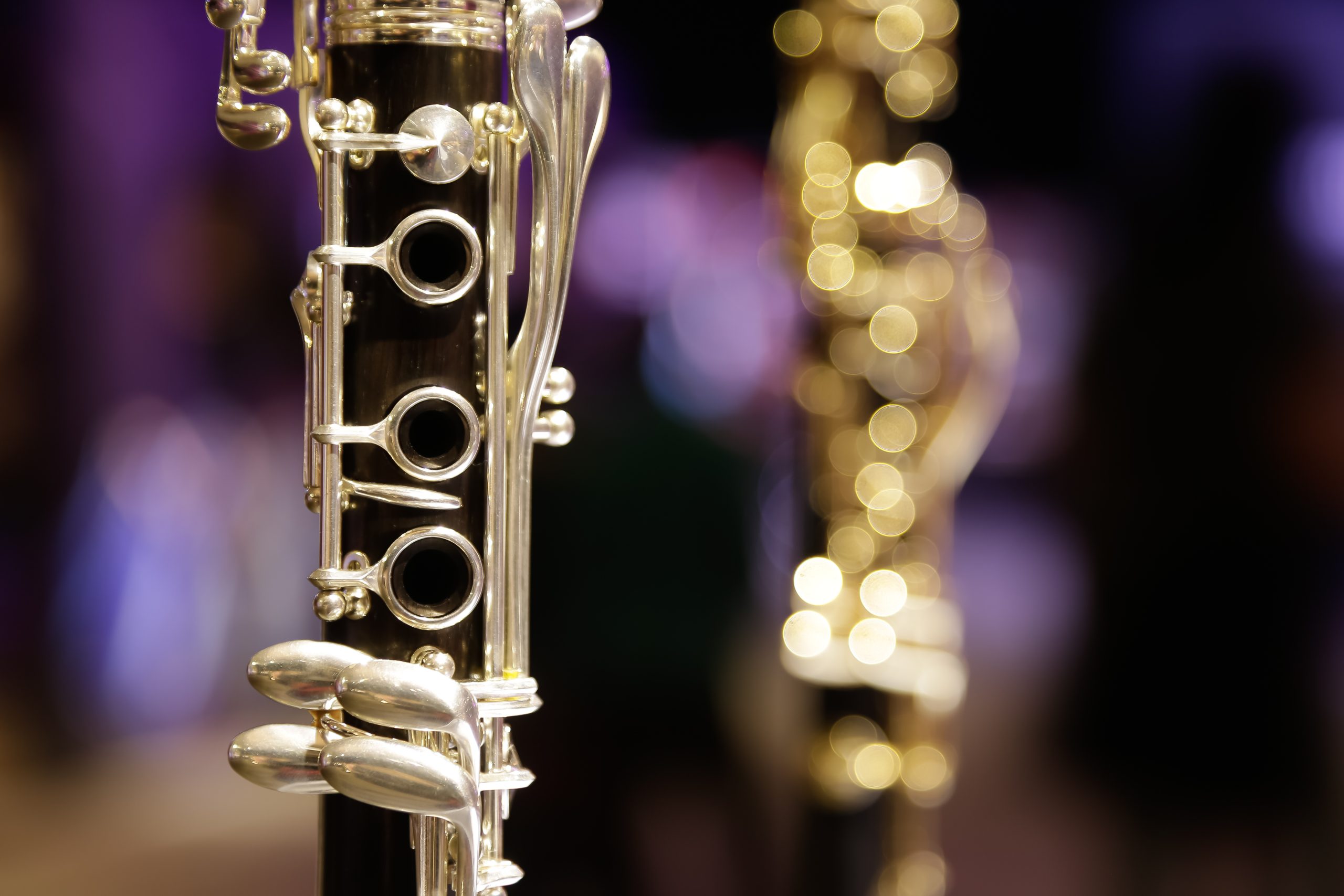
The clarinet does not make music. The body does, and the clarinet is the means through which that movement becomes audible.
If the movement of the body is what is needed to create sound, then considering our bodies and how they move is essential in clarinet pedagogy. It is certainly traditional pedagogy to look at some aspects of the body like hand position and embouchure, but what if we looked deeper into what we cannot see? This can allow us to explore parts of the body that aren’t visible, like the arm structure and spine, as well as the thoughts and past experiences that contribute to movement.
The question that follows is not simply mechanical. It is not only whether the joints are free and the map accurate. It is whether the person inside the body feels free to show up fully. That is a different order of question, and it is where this final article begins.
TWO MAPS, ONE PERSON
In our earlier articles, we introduced Body Mapping: the practice of bringing accurate anatomical information into direct, sensory contact with what the body is actually doing. The brain stores a representation of the body, and we move according to that representation. When the map is accurate, movement is efficient and available. When it is inaccurate or incomplete, the body compensates, recruiting effort where coordination would serve better.
The body map, however, is not the only map we carry. Alongside it sits the self-map: the brain’s representation of who we are. The self map holds our beliefs about our ability, our sense of whether we belong in a given room, the stories we tell ourselves about what we are capable of, and what others expect of us. It is shaped, like the body map, by lived experience. And like the body map, it can be accurate or inaccurate.
These two maps are not separate systems. They are two aspects of the body schema, in the same way that mind and body are two aspects of the whole person. Each shapes the other. A self map that holds the belief that I do not belong here, that I am not able to do this, or that what I offer is not valuable does not stay abstract. It organizes the body. The shoulders come forward. The breath shortens. The fingers tighten. The body map follows the self map because the body is always doing what the whole self believes is true.
Most of what we call technical problems are not from a lack of ability or discipline; they are confusion in the map. A clarinetist who cannot release tension in difficult passages will often try harder or work harder to accomplish the passage. Often, it is the solution of “try harder” that creates the problem. This requires investigating the self map to uncover and change.
The questions that open the self map are different from those that open the body map. We don’t ask about a body part; rather, we ask:
- Who am I in this room?
- What do I believe about what I am capable of?
- What story am I telling myself right now, and is it helping or limiting me?
- Do I feel safe here? Do I believe I belong?
- Do I believe that I can be successful?
These questions may seem therapeutic; they expose the beliefs that the body is already acting on. While these may be questions that arise in a therapeutic environment, they are also pedagogical, because how you answer them determines which movements are available to you in the studio, the rehearsal space, and on stage. If you don’t feel that you belong or are capable of success, you will always work harder than may be required, regardless of how many hours you have practiced.
As you dive into the self map, it is important to approach it with compassion. The experiences that have shaped us have also contributed to all we have accomplished. This cannot be overlooked; in fact, it must be acknowledged and valued before we can change. Even though it may be uncomfortable at times, come to this work with more curiosity than judgment, attention rather than correction, and enough safety to honestly consider what these questions bring. Recognizing that we are all imperfect humans is important for establishing a safe space for ourselves and students.
THE PRACTICE ROOM IS A LABORATORY
We have all kinds of ideas, fears, and stories to tell of our experiences in a practice room. For most of us, it is the place where we have spent the most formative time of our careers. Most of us would agree that the practice room is where we learn how to get it right. A laboratory is a different kind of space, where we don’t already know the answer. Sometimes we don’t even know the question. In a laboratory, we design conditions to find something out and to learn. Curiosity leads us to notice what changes and what does not.
Thinking of the practice room as a space for curiosity, exploration, and experimentation helps us to avoid the judgment that closes access to the body map and the self map. The stakes are lower in this space than they are in the studio or rehearsal space. Our attention is less divided than when we are on stage. It is here that we can discover our potential, what we can bring into all the spaces we must perform in.
“How do I do this,” you might ask, “when I have so little time, so much material, and I already have to pay attention to my embouchure, rhythm, tone, and musical expression?” Bringing attention to the body can be overwhelming—at first. With time and practice, it will become part of the experience of music making rather than a distraction. For some, it may be the freeing experience they have been waiting for, the opportunity to step back from the minutiae and feel the larger experience. Attentional priorities will shift, but only temporarily. It’s like changing the embouchure: start slow, remind yourself often, take breaks, and give yourself space to explore and learn.
Here are some specific strategies you can incorporate to shift the structure of your practice:
1 Practice in a space that is safe enough for you to experiment in and includes a mirror.
2 Incorporate constructive rest or meditation before practice begins. If these are not comfortable, take a few minutes to close your eyes and acknowledge that you are breathing and that support from the floor or chair is present.
3 Bring attention to your body’s movement as you put your instrument together. The way you put your instrument together sets the tone for how you play it.
4 While in front of the mirror, slowly bring your instrument up to play. What did you notice as you brought it up? Where do you feel muscle activation? Was there an unexpected movement that caught you by surprise? If so, this could be a time to explore the body map and movement possibilities. Asking yourself, “what movement and amount of effort are necessary?” can help determine if you need to adjust the movement or effort level.
5 Begin your warm-up while watching yourself play. Long tones can be a great time to watch your embouchure, hand position, facial expressions, etc., but don’t forget to notice your whole body as you play.
6 As you begin the next step of your warm-up or practice, take a moment to acknowledge your breathing. Has it changed from when you were putting your instrument together or playing long tones?
7 Watch your playing in front of the mirror. If you notice an area of the body that looks or feels stiff, try moving it as you play. Does that change the movement of breathing or freedom of the fingers? Did it change the sound quality or fluidity of the technique?
8 When you move on to the next exercise or piece, ask yourself how you feel about playing it, and take a moment to reflect on those feelings. If a negative feeling or answer is a result, then perhaps reframing the mindset can be helpful. Carol Dweck’s book Mindset: The New Psychology of Success can be a helpful tool.
9 As you approach a difficult passage in your practice, acknowledge the challenges it presents and watch yourself in the mirror as you play. Video recording can also be a helpful way to watch yourself play, especially if you are trying to observe longer stretches or it is a piece or section that you don’t know well yet. What do you notice? How much effort are you using? Where is the effort? Can you use less effort?
10 With each passage you play, think about what you want the audience to experience as they listen to this piece. Maybe there is a certain mood or character you want to portray. Sometimes exploring an array of adjectives, visual imagery, or color palettes can aid in finding your musical voice.
These are all suggestions for incorporating Body Mapping into a practice session. They can also be added to a practice session one at a time or in combination. Start with one, and add them as you feel is appropriate and necessary for you.
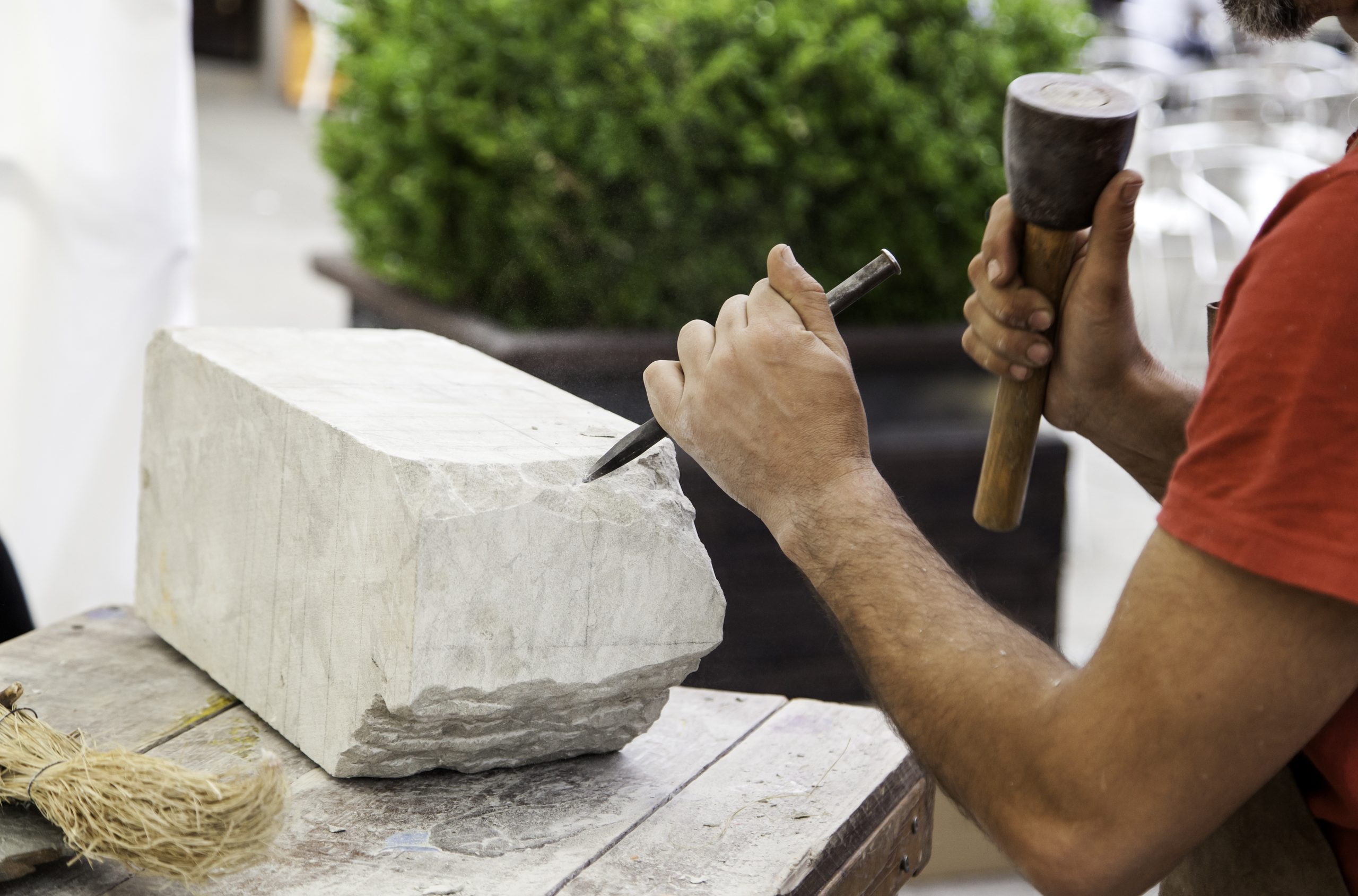
The clarinet may be the tool through which music is expressed, but it is the whole person who brings
that music to life.
THE TEACHING BODY
A final contribution for you to consider is that all of what has been discussed here applies to teaching as much as it applies to performing. More specifically, it applies to the teacher more than it applies to the student.
Students learn from what they see their teachers do and embody just as much, if not more than, what they hear their teachers say. If we talk about the importance of releasing the shoulders, while holding our shoulders rigid, that modeling teaches one thing while saying another. When the student receives both verbal instruction and an embodied model, the body often wins.
The teacher’s body map is not the only thing in the room; their self map is present, too. Students not only receive a movement model but also a model of what it looks like to believe they belong here, to believe that what they offer is valuable, to approach difficulty with curiosity, and to have healthy and safe boundaries. If a teacher can say, with genuine openness, “I am not sure what is happening here; let’s find out together,” they are demonstrating something about the self map that no amount of technical instruction can provide.
The teacher’s relationship to their own maps, body and self, is perhaps one of the most consequential and least examined pedagogical methods in our field. We train teachers in repertoire, technique, history, theory, and aural skills. And we are beginning to teach performers about how their bodies can move to avoid injury and reach their creative potential. We rarely invite students, and teachers alike, to examine what they believe about themselves in the rooms they move through, and what that belief is already teaching. We carry these maps into every space; the question is, are we listening to what they say and what we convey through them?
CONCLUSION
In our final article as ICA’s Co-Pedagogy Coordinators, we hope to inspire a childlike curiosity in your practice and teaching that approaches music with an open mind, explores new possibilities for creating sound, and invites deeper reflection on how the body and mind work together in music making. We hope you will continue to question assumptions, investigate your own body maps and self maps, and create a space for exploration rather than judgment. Most importantly, we hope you will model that curiosity with confidence for your students, demonstrating that growth is not found in having all the answers, but in remaining open to discovery. The clarinet may be the tool through which music is expressed, but it is the whole person who brings that music to life.
 Shawn L. Copeland is a pioneer in the fields of musician wellness and performance training. His innovative, creative, and transformational approach has set him apart as a multidimensional musician, pedagogue, and entrepreneur. His unique methods have established him as a leader, culminating in the founding of mBODYed, LLC, a company that is reshaping the landscape of performance training for musicians, actors, and dancers. Shawn is a performing artist and clinician for Buffet Crampon USA, Gonzalez Reeds, Inc., and the Silverstein Group.
 Jackie McIlwain, D.M., is a passionate clarinet pedagogue whose innovative teaching infuses principles of Body Mapping and Alexander Technique, providing fresh ideas and perspectives that not only help her students grow musically but also challenge them to incorporate their whole selves into their music. Dr. McIlwain has been at the University of Southern Mississippi since 2013 and currently serves as associate professor of clarinet. She is also a Buffet Crampon performing artist and Vandoren artist-clinician.
Comments are closed.