


TCO Audio Reviews: Spring 2026
Karl Kolbeck, Audio Review Editor
Natalie Szabo, Associate Audio Review Editor, TCO
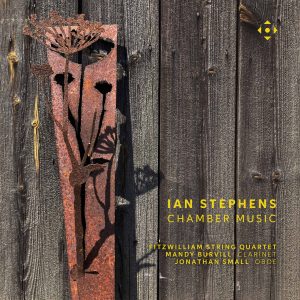 Ian Stephens: Chamber Music. Mandy Burvill, clarinet; Jonathan Small, oboe; Fitzwilliam String Quartet. I. Stephens: Celtic Elegy; Clarinet Quintet; Springhead Echoes; North Country; Oboe Quintet. DDX 21105. Total time: 74:28.
Ian Stephens: Chamber Music showcases the lyricism, clarity, and nuance of folk music. Stephens, raised in Devon, England is both a composer and arranger, and has the unique ability of highlighting music’s most natural tendencies, whether written by himself or others. The album begins with Celtic Elegy, written in 2002 for Stephens’s wife, clarinetist Mandy Burvill. Based on the Irish tune She Moved Through the Fair, this work is the middle movement of Stephens’s Three Miniatures for clarinet and cello. Burvill and cellist Heather Tuach combined their instruments as one as they played with a bagpipe inspired sound in this calming and beautiful work.
The album continues with Springhead Echoes and the Clarinet Quintet, which were both written in 2017 to celebrate the lives of Rosalind and Brian Richards, two close colleagues of Stephens. The Fitzwilliam String Quartet presented both the light pizzicato moments of the first two movements of Springfield Echoes and the softer, more melancholy sections of the third movement with equal ease and finesse. Stephens incorporates Brahms’s Violin Sonata No. 1 themes flawlessly into this work while also incorporating his own use of counterpoint, melody, and harmony. The Clarinet Quintet calls from themes by Beethoven, specifically the Prisoners’ Chorus, “O welche Lust” from Fidelio, and also continues with use of the Brahms theme. A familiar soundscape of upbeat pizzicato carried on into this piece as Burvill and the quartet performed with enthusiasm and immaculate technique. The lyrical sections matched the more technical, bringing out themes with subtle dynamics and emotional melodies.
The latter half of the album includes North Country (2021), a dance-like piece commissioned by instrument maker Paul Bryant, followed by Oboe Quintet (2014), which features oboist Jonathan Small. Small begins this work with a solo in the oboe’s rich middle register, leading into an impressive Bach-inspired lyrical and technical soundscape displayed by him and the Fitzwilliam Quartet. Small finishes off the piece once again in a solo, with distinct yet subtle vibrato and a warm tone.
– Lara Neuss
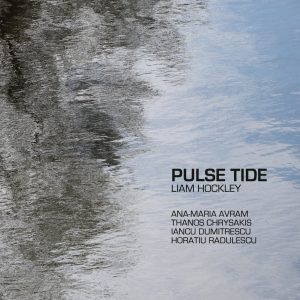 Pulse Tide. Liam Hockley, basset horn. A. Avram: Penumbra. T. Chrysakis: Egress. I. Dumitrescu: Aura. H. Rǎdulescu: Capricorn’s Nostalgic Crickets. Digital Release. Total time: 57:37.
Pulse Tide is the debut solo album of Canadian clarinetist Liam Hockley. An advocate for new and experimental music, Hockley has appeared at prominent festivals like Stockhausen Konzert und Kurse, Music on Main’s Modulus Festival, Tongyeong International Music Festival, and as soloist with the University of British Columbia Symphonic Wind Ensemble, the Victoria Symphony, and the Greater Victoria Youth Orchestra. He currently serves on faculty at the Victoria Conservatory of Music and as clarinetist with the Vancouver Inter-Cultural Orchestra. To learn more about Hockley, visit his website, liamhockleyclarinet.com.
Named as one of The Wire’s 10 Best Modern Classical Releases of 2024, Pulse Tide was recorded at Stratford Studio in Surrey, British Columbia under the Aurel Terrains recording label. Lasting a little under one hour, the album consists of four spectral works for basset horn in both solo and ensemble settings. According to Michael Schell, in his article Remembering Ana-Maria Avram, spectralism in music was defined as “a way of composing that focuses on tone color as a primary musical parameter and places an emphasis on forms built from continuous processes rather than delineated sections.” Each of the pieces embodies spectralist ideas by exploring the vast array of sonic capabilities of the basset horn, including quarter tones, multiphonics, breath sounds, key clicks, pitch bends, and more, while lacking clear melodic ideas and traditional formal unity. The recording quality of this album is quite remarkable, allowing the listener to appreciate the nuance of sound created by these extended techniques.
Penumbra, for solo basset horn, was composed in 2001 by Ana-Maria Avram (1961-2017), who was known as the leader of Romanian spectralism. Avram’s avant-garde compositional style, akin to other musical leaders like Xenakis, was seen as a political rebellion, having grown up under the Ceaușescu dictatorship. Interestingly, Avram was married to Iancu Dumitrescu, whose work Aura (2009) for solo bassett horn, is featured on the third track of this album. Together, the couple founded the Hyperion Ensemble in 1976 and the Edition Modern record label in 1990. Dumitrescu is a composer, conductor, and musicologist, whose compositions are influenced by Schoenberg and Webern. His musical concepts are highly philosophical, pulling from Husserlian phenomenology.
The second work by Thanos Chrysakis, Egress I, features one ‘live’ and four pre-recorded basset horns. Chrysakis is a Greek composer and producer whose musical focuses are contemporary, improvisatory, and electro-acoustic. This work included a movement entitled Egress II for solo E♭ clarinet.
The final work on the album, lasting almost 24 minutes is entitled Capricorn’s Nostalgic Crickets for seven basset horns. This piece was composed in 1972 by Romanian composer Horațiu Rădulescu, who was credited with the invention of the spectral technique. His music was incantatory, ritualistic, he believed in beauty as a salvation for society, he wrote for posterity. He was mathematical, poetic, magical. He was occult, he was Pythagoras. From what I can gather, he was—as other Romanian composers of his generation—a man of the world with a cosmic approach and ego. This last track most exemplifies the namesake of the album, Pulse Tide, as the listener can clearly hear surges of sound, each created by layering extended techniques of the basset horns. Often these soundscapes take surprising turns that allow the listener to stay engaged through the extended musical journey.
Liam Hockley’s performance on this album is masterful. His flexibility of sound, mastery of an array of extended techniques, and attention to nuance and blend is admirable. If you are looking for an album filled with hummable melodies, this one is definitely not for you. However, if you are looking to be transported to an alternate dimension of sound whilst exploring the sonic capabilities of the basset horn, you’ve found your next album! Bravo to Hockley for his expert contribution to the recorded contemporary repertoire for clarinet.
– Kelsey Paquin
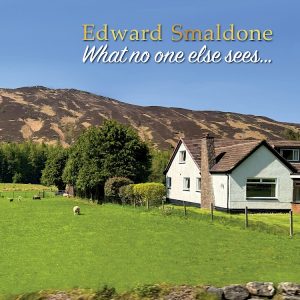 What no one else sees... Søren-Filip Brix Hansen, clarinet; Niklas Sivelöv, piano; Opus Zoo Woodwind Quintet; Royal Scottish National Orchestra, Mikel Toms, conductor; Royal Life Guards Music Band, Giordano Bellincampi, conductor . E. Smaldone:Beauty of Innuendo; Prendendo Fuoco; Murmurations; June 2011; What no one else sees. Digital Release. Total time: 75:04.
What no one else sees… features orchestral pieces, concertos, and chamber music composed over the course of 15 years by Edward Smaldone, professor emeritus at the City University of New York. Smaldone’s sound world blends late Romantic and early 20thcentury classical influences with jazz into layered, intricate textures. The strongest work on the album is the title track, What no one else sees…, written for woodwind quintet and captured in an impressive live performance by the Opus Zoo Quintet (Denmark). Each of the three movements depicts a different mood (“Playful,” “Serious,” and “Free Spirited”). The wind quintet is a perfect medium for Smaldone’s complex contrapuntal writing, with each player performing virtuosic parts. The album also features the clarinet concerto Murmurations, performed by Opus Zoo’s clarinetist Søren-Filip Brix Hansen and the Danish Royal Life Guards Music Band. It depicts a flock of starlings circling and darting, led by the clarinet soloist and imitated by the ensemble. Hansen’s fantastic playing shows off a full range of styles, articulations, and dynamics. This recording captures the best playing of Hansen. The other orchestral works on the album, including Beautify of Innuendo and June 2011, also feature the clarinet in a large ensemble setting. Overall, this portrait album is an excellent listening experience for audience members interested in contemporary orchestral music featuring the clarinet.
– Erin Cameron
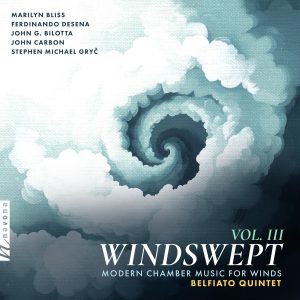 Windswept, Vol. III. Jiří Javůrek, clarinet; Oto Reiprich, flute; Jan Souček, oboe; Jan Hudeček, bassoon; Kateřina Javůrková, French horn. M. Bliss: The Discovery of Honey. F. DeSena: Rebound. J. Bilotta: Brain Freeze. J. Carbon: Woodwind Quintet. S.M. Gryč: Five American Portraits for five wind instruments. NV6725. Total time: 38:07.
Navona Records’s third installment in their woodwind quintet series features the Belfiato Quintet performing five modern chamber works and also includes a visual album. The highlight for me was the opening piece, The Discovery of Honey. Delightfully engaging and programmatic, the performers employ the use of pitch bending, a variety of percussion instruments, and kazoo to mimic the sound of bees and other woodland creatures in the forested Rhodope Mountains. Playful, frivolous, and at times almost raucous, the piece depicts the ancient Roman story of Bacchus as he discovers honey and the listener is treated to a lyrical, oozing clarinet melody. Clarinetist Jiří Javůrek’s full, warm tone and long, flowing lines perfectly embody honey oozing from the beehive.
Javůrek is featured in movement one of Five American Portraits for five wind instruments and takes on the character of social critic H. L. Mencken. The movement is energetic from the start, with Javůrek repeating insistent high clarion Cs interspersed with technical flourishes and at one point, a rhythmic, dance-like melody while the rest of the ensemble interjects with quick rebuttals. The repeated note becomes higher after each interjection, as if the clarinetist is becoming progressively more insistent in his argument before winning in the end. Each additional movement highlights a new member of the quintet and a new famous American figure, and every musician exhibits exemplary musicianship and artistry on their instrument.
Throughout the album, the performers blend beautifully to create a gorgeous and cohesive ensemble sound. Javůrek demonstrates remarkable versatility as both an ensemble player and a soloist as he fluctuates from seamlessly blending into the texture of the quintet to emerging with colorful and expressive soloistic flairs. This album was a true joy to experience!
– Sarah Korneisel Jaegers
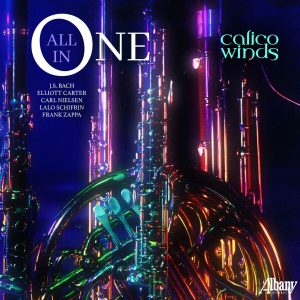 All in One. Kathryn Nevin, clarinet; Eileen Holt, flute; Kathleen McNerney, oboe; Theresa Treuenfels, bassoon; Rachel Berry, horn. J.S. Bach/arr. R. Stevens: “Little” Fugue in G Minor. E. Carter: Woodwind Quintet. C. Nielsen: Quintet, op. 43. L. Schifrin: La Nouvelle Orleans. F. Zappa: Very Fiast Wind Quintet. TROY1993. Total time: 46:48
Calico Winds benefits from beautiful individual sounds and collective knowledge in many styles; from Bach’s “Little” Fugue with its reedy organ-like feel blending small groups together creating new timbres all the way to Zappa’s Very Fast Wind Quintet, a short ride with well-produced unison rhythms serving both as a crowd-pleaser and an amuse-bouche.
Elliott Carter’s Woodwind Quintet is a riot of rhythms featuring precise entrances. The second movement is particularly impressive with its light quick articulations layered above longer durations of notes causing the meter to feel akin to shifting tectonic plates. The ensemble contributes to a dance party feel and the clarinet stands out with fun colors and character in overarching lines.
In the Nielsen Quintet, emphasis is given to the accents within the phrasing and the alternation between instrument pairings is handled with care. The bassoon and horn are especially effective in their grouping. The second movement solo creates a delicate knit feel as Nevin shows ease and control in the long phrases. The third movement is the most challenging. It begins with a singing flute solo then moves into a hymn style song with the clarinet demonstrating flexibility and a bit of wildness. Strong cores of each instrumental sound allows the melody to be traded without obvious shifts in timbre. Big personalities are present in the clarinet and bassoon exchange with wildly fun altissimo passages and comical bassoon guffaws.
Musicians are given material that is more personality-driven in Schifrin’s piece including driving bass lines, comedic melodic turns, drama, and a touch of jazz with that New Orleans ambiance. Kathryn Nevin plays her clarinet with emotion and shows herself to be comfortable in many styles. The clarinet is featured throughout and her tone is round, warm, and delightfully wistful.
– Andrea Vos-Rochefort
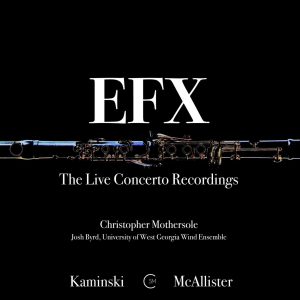 EFX: The Live Concerto Recordings. Christopher Mothersole, clarinet; University of West Georgia Wind Ensemble, Josh Byrd, conductor. S. McAllister: Black Dog. C. Kaminski: Read Between the Lines. Digital Release. Total time: 19:57
There is something wildly fun about Christopher Mothersole’s EFX: The Live Concerto Recordings. Its opening, Scott McAllister’s Black Dog, written by inspired by the Led Zeppelin song of the same name, is ferocious in its power, the clarinet so clearly mimicking both the timbre and power electric guitar as it wails and wriggles around. After his declarations and exasperated growls, delightfully accentuated by the electronics, the University of West Georgia Wind Ensemble guides Mothersole to a pensive environment, allowing him to shape a delicate and wavy tone that can cross the gentle wading of the ensemble through the middle section. As we move upward slowly, a note to Zeppelin’s Stairway to Heaven we move toward a plethora of bold rhythmic gestures, wading between jazzy mambos and postminimal grooves. Mothersole’s cadenzas have a rock and roll feel to them while still showcasing what the clarinet can do, wail and scream while playing so neatly.Reed Between the Lines by Christopher A. Kaminski offers a different approach to electronic clarinet, featuring a subtle groove for Mothersole to lean into a freer melody while having a chorale-like reverb within his sound. There are brilliant duets between the clarinet and itself, with the distortion adding a layer of grit to the schmaltzy big band like feel of the wind ensemble.
– Michelle Hromin
Comments are closed.