


Originally published in The Clarinet 53/4 (September 2026).
Copies of The Clarinet are available for ICA members.
Audio Reviews:
September 2026
RECORDINGS
 Charles Harford Lloyd: Chamber Music for Clarinet. Matthew Nelson, clarinet; Alexander Volpov, cello; Chad Sloan, baritone; Anna Petrova, piano. C.H. Lloyd: Trio for Clarinet, Cello, and Piano in B–flat Major; Duo Concertante; Annette; Suite in the Old Style; Le Départ; Three Little Pieces; Idyll; Bon Voyage!. Toccata Classics, TOCC 0768. Total Time: 57:18.
I first became acquainted with the clarinet music of the Englishman Charles Harford Lloyd (1849-1919) in the late 1980s, when I wrote about him in a doctoral dissertation. It’s gratifying, therefore, to be able to review Matthew Nelson’s new album of his music some 35 years later. Lloyd was a well-regarded (though stylistically conservative) composer. His clarinet music, written between 1886 and 1914, shows no trace of the Wagnerian chromaticism that influenced so many composers of that era, let alone of the more modernist trends that were emerging at the time. Rather, the works presented on this album represent a style characteristic of a more sentimental age perhaps a half-century earlier. As such, they make good recital companions for pieces like the Schumann Fantasiestücke. The recording offers two longer, multi-movement works alongside several shorter pieces. In addition, there are two works where the clarinet (in C!) is substituted for the original violin. As a bonus, a work for cello and piano is included, making the overall programming of the album pleasantly varied.
The weightiest work on the album, Lloyd’s Trio in B-flat Major for clarinet, bassoon, and piano (c. 1900) is here performed with cello instead of bassoon, a substitution that works well. It is a musically substantial piece in three movements, each of which ticks the expected box, formally and expressively: a hefty opening Allegro con brio, a noble Andante espressivo in the middle, and a cheerful closing Allegro moderato, the whole coming in at about a total of 20 minutes. While not comparable to the Brahms op. 114 in profundity, Lloyd’s Trio is nevertheless thoroughly enjoyable for both performers and listeners.
The other multi-movement work on the album is the last clarinet work Lloyd composed: Suite in the Old Style for clarinet and piano (1914), dedicated to the English clarinetist Charles Draper. As the title suggests, the work is a dance suite after the baroque manner, consisting of an opening “Prelude” followed by four dances: “Allemande,” “Minuet,” “Sarabande,” and “Gigue.” This charming work is of only moderate difficulty, appropriate for an intermediate clarinetist, but would also be satisfying for a more skilled player.
The shorter works original to the clarinet include the single-movement Duo Concertante (1886), a brief character piece entitled Bon Voyage!(1887), and a song for baritone voice, clarinet, and piano entitled Annette (1886), to a text by William Leonard Courtney. All were written for performance by amateurs and therefore, like the Suite, will prove gratifying for both intermediate and advanced musicians. I find the tuneful Bon Voyage! particularly attractive, and at about two-and-a-half minutes, it would make a lovely recital encore.
Several works on the album were original to the violin, but work well on clarinet. These include Three Little Pieces (1919) and Idyll (1912). These fill out the recording nicely.
Matthew Nelson and his colleagues perform beautifully on this album. Nelson plays with a centered but colorful sound and wonderful expression. His abundant musicality shines through soaring phrases and a wide dynamic range. Although the music is not particularly technical in nature, it is clear that Nelson has complete control of this aspect of his playing. Those wanting to hear more of his prodigious dexterity will enjoy his 2017 release Meditations and Tributes, where he takes on solo clarinet works by Saariaho, Donatoni, and other contemporary composers. Here, listeners can delight in the discovery of a forgotten late Victorian whose compositions deserve to be resurrected. The recorded sound on the album is excellent, and the accompanying booklet provides copious information on Charles Harford Lloyd and his time.
– Jane Ellsworth
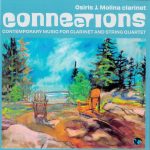 Connections: Contemporary Music for Clarinet and String Quartet. Osiris J. Molina, clarinet; Jenny Grégoire, violin; Silvia Rath, violin; Jennifer Whittle, violin; Jacob Adams, viola; Moisés Molina, cello. B. Kershner: Three Pressings, for Clarinet and String Quartet; J. Burel: Andooni; J. Landers: Eclogue; G. Vajda: Alice Études. Blue Griffin Recording. BGR717. Total Time: 69:16.
This 2026 album featuring clarinetist Osiris J. Molina highlights four contemporary works for clarinet quintet, beginning with Brian Kershner’s Three Pressings. Each of this piece’s three movements was built from a pitch combination taken from a nonatonic scale created by the composer. Molina’s virtuosic playing is clear from the first notes of the bold and declamatory opening, where his smooth and focused clarinet tone soars over the rumbling strings. Throughout each movement, he demonstrates an impressive fluidity at a range of dynamics across each register of the instrument. Molina portrays an assortment of characters throughout the piece, at times joining into the falling flutters of the string lines and at others boldly taking over the melodic line. A highlight is the beautiful matching of tone colors in the final ascending line of the first movement, where the line passes almost seamlessly from cello to clarinet in a long diminuendo.
Joshua Burel’s Andooni—“without a home”—utilizes the melody composed by Armenian monk Komitas, who was arrested at the start of the Armenian Genocide. Though he was eventually released and survived, his trauma was such that he never composed again. Originally a reflection of the centuries of conflict in Armenia, the tune has come to more often symbolize the Armenian Genocide. Burel’s piece depicts the displacement of the Armenian people after 1915. Instability lies at the heart of this deeply moving piece, and Burel utilizes microtones to, in his words, “create the illusion that fixed pitches … shift sharp and flat.” Molina’s high, clear lament rings over the ominous opening in the strings, at times creating dissonance, and chord tones constantly shift throughout the piece, creating a sense of dislocation and turbulence. The constant chord changes, one note at a time, finally come to a rest and settle into one final, very long chord that fades to nothing to conclude the piece.
Joseph Landers composed the next piece on the album, Eclogue, for Molina. As in classical poetry and similarly titled pieces of music, Eclogue designates a work with a pastoral or meditative quality. Throughout the piece, it was obvious that the clarinet was in conversation with the strings. Molina truly brought the piece to life, demonstrating sensitive musicality and nuanced phrasing that enabled the listener to clearly follow the musical exchange. Though the clarinet typically led the conversation, each instrument played off the others in the ensemble. Molina exhibited true musical mastery in his variety and distinction in dynamics, articulations, and timing in a dialogue that felt carefree and spontaneous.
The album concludes with Gregory Vajda’s Alice Études, a seven-movement piece with each movement inspired by a quote from Lewis Carroll’s Alice in Wonderland and Through the Looking Glass. Several movements are also homages to composers or offer Vajda’s take on a work by another artist, including György Ligeti, David Del Tredici, Unsuk Chin, Taylor Swift, and Tom Waits. The movements are étude-like in that they focus on one or two musical concepts. Movement one, for example, explores “thinking slow while falling fast,” and it was indeed easy to hear the long, slow fall of Alice down the rabbit hole. From the start, cascading lines in the strings (“falling fast”) were joined by Molina playing very soft, beautifully controlled long tones throughout the range of the instrument (“thinking slow”). Throughout each movement, dissonances, sudden staccato outbursts amid long languid lines, and extended techniques conveyed the awkward and unusual feeling one would expect from Wonderland. Even the final chords of movement seven, when Alice awakes, are uncertain—the listener is not quite sure which will be the true conclusion.
From fun and whimsical to poignant and heart-rending, this album is a journey through the continued possibilities of music for clarinet with string quartet, expertly performed by all the involved musicians. I absolutely recommend it.
– Sarah Korneisel Jaegers
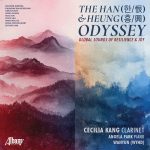 The Han(한/恨) and Heung(흥/興) Odyssey: Global Sounds of Resilience and Joy. Cecilia Kang, clarinet; Angela Park, piano; WanYun (WYHD), ensemble. H. Kim: Arirang Madrigal; Poetree; S. Uhm: Echoes of Hahoe: A Masked Reverie; M. Mellits: Andromeda; J. Montgomery: Peace; T. Kim: Sweet, Savory, and Spicy!!; K. Kalaichelvan: Do the waters stutter?; E. Alberga: “Duo” from Dancing with the Shadow; K. Lau: Cradle; S. Kim: Ballade. Albany Records, TROY2005. Total Time: 56:44.
A collection of works for clarinet, voice, piano, and electronics, the album The Han and Heung Odyssey: Global Sounds of Resilience and Joy does a wonderful job of introducing these Korean culture concepts to the world through music. Recorded by Cecilia Kang (clarinet), Angela Park (piano), and WanYun (WYHD) ensemble, this album features nine living composers’ works which either represent the deep-seated sorrow and grief of han or the contrasting joy and vitality of heung.
The album begins with three pieces that all feature the use of electronics. The first track is Arirang Madrigal, a polyphonic work with vocals and clarinet on top of an electronic backdrop. Inspired by a mask dance, the second track, Echoes of Hahoe: A Masked Reverie for clarinet, piano, and electronics is a powerful work with groove that combines the sounds of traditional Korean instruments with electronic beats. This is followed by Andromeda by Marc Mellits, which utilizes a looper/harmonizer to create a layered, almost percussive effect for the melody to soar over.
The album then features several works for clarinet and piano. Eerily beautiful, Peace was written shortly after the first quarantine orders due to COVID-19 and truly captures the sadness that many of us felt during that time. Sweet, Savory, and Spicy!! was commissioned by Kang and is inspired by the famous Korean chili pepper paste, gochujang, bringing excitement with lots of driving rhythms and syncopation. While Kang’s playing throughout this entire album is flawless with tons of character, these next three works really showcase her mastery of the instrument. Do the waters stutter? features gorgeous melodic lines that start to take shape, just to fizzle out before starting a new melodic line in its place. “Duo” from Dancing with the Shadow is the first movement of a chamber work by Jamaican-born composer Eleanor Alberga. Also commissioned by Kang for this album, Cradle features lots of wide leaps within the melodic line. Kang not only performs these with ease but does so with an elegant tone.
The album continues with another piece that features the WanYun ensemble, Poetree, which resembles a similar musical landscape to the first track on the album. Kang’s ability to smoothly execute alternate fingerings to replicate the timbral changes within the vocal line is exquisite, adding nuance to the collaboration between the voice and clarinet on both tracks. The album concludes with Ballade, a somewhat jazzy piece with the use of call-and-response and a beautiful melody played with grace. Kang and her collaborators do a spectacular job of showcasing these two Korean emotional concepts in this must have album that delivers on many levels.
– Jeremy Wohletz
 Bach, Berio, Boulez: Music for Solo Clarinet. Marek Švejkar, clarinet. L. Berio: Lied; Sequenza IX; P. Boulez: Domaines; Dialogue de l’ombre double for clarinet and electronics J.S. Bach: Partita in A Minor, BWV 1013. Supraphon, SU 4362-2. Total Time: 72:00.
Introducing here the debut solo album from Czechoslovakian clarinetist Marek Švejkar who recorded these unaccompanied works in May 2025 and released this recording the following August. According to Švejkar’s biography on his website, he is the first Czech graduate in clarinet performance from the Conservatoire National Supérieur de Musique et de Danse de Paris, formerly known as the Paris Conservatory. With additional studies at Le conservatoire à rayonnement régional de Paris and Accademia Nazionale di Santa Cecilia in Rome, he has an impressive background of awards and honors and international connections. His clarinet studies include work under Philippe Berrod, Jérôme Comte, Franck Amet, Paul Meyer, Alessandro Carbonare and Karel Dohnal. Švejkar currently teaches clarinet at the Conservatory in Teplice, located in the Czech Republic, and has more recording projects in the works.
The recording’s accompanying booklet includes a 1,700-word essay by Matěj Kratochvíl on the connection of these seemingly disparate works by Bach, Berio, and Boulez, which is much appreciated. There is a wealth of information about Berio and Boulez who are honored in this recording on the 100th anniversary of their birth in 1925. Aside from their similar birth years, there are plenty of connections between these two influential 20th-century composers. This recording includes Boulez’s 1985 version of Dialogue de l’ombre double for clarinet and magnetic tape that the composer reworked and dedicated to Berio for his 60th birthday. The booklet also includes information about literary works, plays, poems, etc. that inspired these composers’ pieces. Curiously, a biography of the soloist is not included, unfortunately, nor is there information about the process to create Bach’s flute partita arrangement used in this recording for those curious about choices of phrasing, articulation, and ornaments.
Švejkar’s versatility as an accomplished clarinetist is evident throughout this recording of over 70 minutes of solo music. Berio’s and Boulez’s cerebral music is presented here with great musicality and expression. Švejkar’s tone is full, cored and focused, sparkly, with absence of reediness. Both the full dynamic and tonal color spectrum is present. For instance, the hollow opening of Berio’s Lied compliments the mood. Spunky, spirited rapid articulation passage-like interjections interrupt the placid serenity. Flawless technique abounds in these demanding pieces and extended techniques required here and there are well-executed, adding another dimension of tone colors. Including the Bach Partita in the middle of this recording provides a marked contrast and welcome respite from the intensity of Berio’s and Boulez’s works. In the faster paced movements, employing a light articulation throughout was impressive; however, adding slurs judiciously would be most welcome for melodic clarity. Švejkar’s phrasing and rubato in the “Sarabande” movement is lovely and the light style of articulation here is reminiscent of the flute, the original instrument for which Bach wrote Partita. Švejkar’s recording of Boulez’s Dialogue de l’ombre double aptly captures the essence of the piece over my speakers, despite Boulez’s detailed instructions about the setup required in the hall including six speakers and the transitions and balance between live and recorded sounds. The captured result in this recording is most impactful!
An impressive undertaking for a solo album, I look forward to hearing more from Marek Švejkar in the future!
– Gail Lehto Zugger
 Gardners at Home. Égide Duo: Joshua Gardner, clarinet; Stefanie Gardner, bass clarinet. A. Bazzini/arr. D. Puccio: La Ronde des Lutins, op. 25; J. Love: The Threshold of the Year to Come; N. Rimsky-Korsakov/arr. Égide Duo: Flight of the Bumblebee; G.J.B. Chamorro: Ambos for two bass clarinets; J. Steinmetz: Songs and Dances; A. Temple: This Changes Everything!. Soundset Recordings, SR1184.
La Ronde des Lutins, op. 25 by Bazzini (arranged by Dan Puccio) is a fantastic display of technical virtuosity and command of the extreme ranges and multiple articulations from both the clarinet and bass clarinet. This recording sounds effortless and serves as a delightful opening to the album.
Joel Love’s The Threshold of the Year to Come is a four-movement work commissioned by the duo. While the piece is extremely virtuosic, it is destined to be a part of the standard duo clarinet repertoire. The first movement, “Anxiety,” features unpredictable rhythmic interplay that effectively evokes the unsettled character suggested by the title. The performance is stellar and lets the music speak for itself. The second movement, “Anger,” features harmonic glisses and singing while playing. One striking aspect of this performance is the immediate shift between extended techniques and traditional clarinet playing. Those shifts are executed flawlessly and are a testament to the mastery the performers have achieved. The third movement, “Hope,” highlights the lyrical prowess of Stefanie Gardner on bass clarinet. She performs the sweeping melodies with a grace and nuance that are breathtakingly beautiful. In the final movement, “Joy,” the playful interplay between the clarinet and bass clarinet creates complexity of texture that is hard to believe comes from only two players. This is a wonderful contribution to the repertoire, and the performance here is a stunning offering by the Égide Duo.
The next track, Flight of the Bumblebee by Rimsky-Korsakov (arranged by Égide Duo), features Joshua Gardner on the clarinet and is a perfect interlude between the heavier works on this album. It is performed with a facility that must be heard to be believed.
Ambos for two bass clarinets by Gabriel José Bolaños Chamorro is a very interesting work which explores the spectral interplay between the timbres of the two bass clarinets. The colors that result from the microtonality and multiple sounds are very compelling. This recording is certainly expertly performed but I can imagine that the timbral experience of hearing it live would be particularly special; in works like this, the resonance of the hall itself often becomes an equal partner in the performance.
The music of John Steinmetz is consistently excellent, and this work is no exception. Songs and Dances is an adaptation of the original version for oboe and bassoon and was commissioned by the Gardners. This piece is nothing short of delightful—it is certainly challenging but not out of reach for serious students and the writing works quite well for each instrument—with each having an equal artistic voice. All the movements are interesting and performed expertly, but the fourth movement, “Dance Song,” is particularly memorable and its groove may be impossible not to love.
This Changes Everything! by Alex Temple is a work for clarinet, bass clarinet, and electronics which combines a lot of disconnected material and sounds into a single work, but that fact is the point of the piece. It’s one where you never know what to expect or what will happen next, even after multiple hearings. This piece is entirely different from anything else on the album and serves the artistic vision of the album—to explore new ways to collaborate and create art during challenging times—particularly well.
The final track of the album, Flight of the Bumblebee, but this time featuring Stefanie Gardner on bass clarinet, showcases jaw dropping multiple articulation facility that she has developed. I’m not sure if this represents the limit of what is possible on the bass clarinet, but it certainly seems close.
This album is a triumph of clarinet technical achievement, contributions to the repertoire through notable commissions and adaptations, and artistic expression in an unlikely format of two clarinets. The Égide Duo has again proven that artistic vision and a collaborative spirit transcend instrumental limitations. They bring this music vividly to life, and the album is one that will be appreciated not only by clarinetists but by musicians of all backgrounds.
– Spencer Prewitt
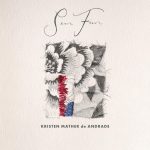 Sem Fim. Kristen Mather de Andrade, clarinet; Vitor Gonçalves, piano, accordion; Eduardo Belo, double bass; Vinícius Gomes, guitar; Dennis Boolyoins (Bulhões), drums; Lívio Almeida, saxophone; Kartrina Owens, flute; Bill Owens, trumpet; Alaina Alster, trombone; Toomai String Quintet: Emilie-Anne Gendron, violin; Emma Frucht, violin; George Meyer, viola; Laura Metcalf-Boyd, cello; Andrew Roitstein, double bass. C. Gonzaga, J. Vignoli: Atraente; R. Boldrin/arr. R. Rocha: Vide Vida Marvada; R. Teixeira/arr. R. Rocha: Amanheceu Peguei a Viola; T. Amélia/arr. E. Neves: Bordões ao Luar; T. Madi/arr. M. Reifenberg: Chove lá Fora; J.R. Europe/arr. L. Raele: Castle Maxixe; D. Freiberg, S. Sater: Endless and Blind; S. Caldas/arr. S. Arcangel: Chão de Estrelas; H. Pascoal/arr. N. Lopes: Frevo Novo; Pitanga/arr. L. Almeida: Clarinete Dengoso; P. da Viola/arr. R. Rocha: Só o Tempo. Ansonica Records, AR0024. Total Time: 40:20.
To save you from having to consult a Portuguese translator, Sem Fim means “endless.” Clarinetist Kristen Mather de Andrade has chosen to title her fifth recording release (three physical and two EP) Sem Fim, implying, perhaps, that music will live forever.
Sem Fim is an album full of various Brazilian forms including choro, frevo, sertanejo, Música Popular Brasileira (MPB), and bossa nova. Celebrating female contributions to music, Mather de Andrade featured compositions by iconic Brazilian female composers Chiquinha Gonzaga and Tia Amélia. An all-female, Grammy winning engineering team recorded, mixed, and mastered the album, produced by Mather de Andrade.
Mather de Andrade is the principal clarinetist for the United States Military Academy Band (West Point). As a member of a premier United States military band, one would expect her technique and sound to be impeccable; she does not disappoint in this regard. In fact, she possesses that elusive quality that many musicians strive for beyond technique and sound. She “swings.” She has a mastery of shaping a phrase in the popular style, as epitomized by Brazilian music. Her performance transforms good music into a soundscape thoroughly enveloping one in the aesthetic, transporting a listener onto a higher plane. If this isn’t enough, Mather de Andrade sings, with lyrics both in Portuguese and in English, in a style which perfectly captures the tradition of the bossa nova.
Sem Fim includes a new composition by Argentine-American composer Daniel Freiberg and a composition by James Reese Europe, who was also an Army musician, like Mather de Andrade. Eight other Brazilian composers are represented on this album, most notably Pitanga, who wrote Clarinete Dengoso, a choro which spotlights the clarinet in a historic form which relied on the instrument as its main voice. This arrangement reveals Mather de Andrade’s impressive range and technique. The other composers featured on Sem Fim were all successful Brazilian composers, performers, and, in one case, a famous actor! All the selections on this album are excellent choices to complete this wholly enjoyable recording.
The ensemble Mather de Andrade assembled must be recognized as well. Thirteen musicians are utilized, including the Toomai String Quintet, a Brazilian rhythm section, and several of Mather de Andrade’s West Point Band compatriots. The ensemble is expansive and varied enough to provide continued interest throughout, with expert arrangements by a handful of different arrangers. With the inclusion of “orchestral” and “popular” instruments in the ensemble, one is reminded of the Third Stream, where musicians incorporated “classical” and “popular” music into a new genre. All of the performers are of the highest quality, negotiating complex arrangements flawlessly.
The digital related content is extensive and quite informative. It is professionally curated on the Ansonica Records website, with extensive notes, artist photographs, and biographies. Overall, the package is quite well presented and includes all the information a listener desires.
Sem Fim is a highly professionally produced album which demands serious listening by a discriminating audiophile, especially one who is intrigued by Brazilian popular music. I encourage you to download this album, and, as you listen to it, imagine yourself walking down a street in Rio de Janeiro, passing the open doorways of night clubs and theaters, as you immerse yourself in multiple genres of fabulous music. Kristen Mather de Andrade writes “Music endures. It is interpreted and reinterpreted thousands of times. In that way, it feels endless.” Mission accomplished!
– Ben Redwine
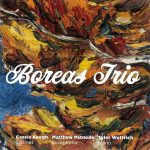 Boreas Trio. Cassie Keogh, clarinet; Matthew Patnode, saxophone; Tyler Wottrich, piano. J. Heins: Capriccio; G. Marie: Feuilles Au Vent; R. Boutry: Paronymes; K. Vanderburg: Earmarks; W. Albright: Pit Band; M. Engebretson: Sharpie; G. Connesson: Techno-Parade. Independent Release. Total Time: 70:00.
The Boreas Trio is a chamber ensemble dedicated to the exploration of music for clarinets, saxophones, and piano. The trio features the diverse instrumentation of the clarinet and saxophone families, commissioning original works and arranging classical repertoire for this ensemble. Members are all professors at the Challey School of Music at North Dakota State University in Fargo.
The album opens delightfully with John Heins’s Capriccio. Ensemble playing is excellent with special kudos to pianist Tyler Wottrich for his virtuosic, dynamic playing. The work definitely reminds one of Poulenc with its bluesy character and humor. Wind intonation and technical precision are very notable in this performance.
The second work, Feuilles Au Vent, by Gabriel Marie, is in three movements. In the first movement, “Dialogue tendre,” saxophonist Matthew Patnode displays a very expressive and beautiful tone. Next, we hear a lullaby of sorts, appropriately titled “Dans la calme nuit.” The lyrical exchange between clarinetist Cassie Keogh and Patnode is wonderfully integrated and blended. The final movement, “En se jouant,” is a jaunty conclusion showing both Keogh’s and Patnode’s excellent, clear articulation.
Celebrated French composer Roger Boutry wrote the third work on this album, Paronymes. The Allegro first movement renders commendable virtuosity by Keogh and Patnode. The rhythmic precision of the ensemble is particularly evident here. The second movement is a curious montage of very lyrical expression, virtuosity and secco articulate writing reminiscent of Lutosławski. Here, the ensemble delivers characters with chameleon-like differentiation. The final movement is an exciting Vivace performed brilliantly by the ensemble.
Composer Kyle Vanderburg is also on the faculty at North Dakota State University. His work, Earmarks, is also in three movements. “Echo Chamber,” the first movement, again exemplifies Wottrich’s excellent technique. Movement two offers beautiful solos by Keogh. The final movement, “Swing States,” begins with an almost hymn-like chorale but then swings into a jazzy romp, performed very humorously and effectively by the ensemble. Keogh gave us excellent glissandi in this performance.
William Albright may be the most well-known composer among clarinetists with his Quintet for Clarinet and Strings among others. In this work, Pit Band, Keogh exhibits exemplary control, tone and dynamics on bass clarinet. Also notable is the ensemble’s ability to capture jazzy sounds and energy.
Mark Engebretson’s Sharpie, also for bass clarinet, saxophone and piano, aptly displays Keogh’s and Patnode’s excellent control of pitch bends and quarter tones. Also notable in this pianistically gnarling writing is Wottrich’s performance with technical excellence.
The final offering on this album is an exhilarating tour de force by Guillaume Connesson entitled Techno-Parade. As consistent throughout the album, the Boreas Trio brings a very polished and stylized performance including extended techniques, prepared piano, and percussion sounds.
I find this recording to be excellent and unique as an important contribution to the clarinet chamber music recording canon.
– Kenneth Long
NEW RELEASES
Momento. The British Clarinet Ensemble, Juliet Colville, leader, Anthony Bailey, conductor; with Anna Hashimoto, clarinet soloist. Independent Release.

All-American Futurity Trials. Shutterspeed Duo: Erich Barganier, guitar, electronics; Ford Fourqurean, clarinets, electronics. New Focus Recordings, fcr476.

The Way Out. Sarah Manasreh-Decker, clarinet; Chris Wild, cello; Matthew Coley, cimbalom, hammered dulcimer, percussion; Katherine Petersen, piano; Jeremy Brunk, vibraphone. Independent Release.
Emporium. Ricardo Morales, clarinet; Aldo López-Gavilán, piano; Boulder Philharmonic Orchestra, Michael Butterman, music director. Reference Recordings, RR-154SACD.
Temporal Echoes: What is Noise. Lindsey Goodman, flute; Anastasia Christofakis, clarinet; Keith Hendricks, percussion; Cholong Park, piano; Joshua Burel, violin; Justin Page, cello. Navona Records, NV6849.
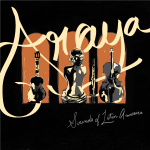
Sounds of Latin America. Araya: Bianca Catalán, vocalist; Sarah Korneisel Jaegers, clarinet; Keric Alvarez Zapata, Venezuelan cuatro; Casey Quon, cello. Independent Release.
Comments are closed.