

Originally published in The Clarinet 53/2 (March 2026).
Copies of The Clarinet are available for ICA members.
A CONVERSATION WITH ROBERT DILUTIS:
On Music, Recording, and Finding Your Voice
Clarinetist and entrepreneur Robert DiLutis reflects on a multifaceted portfolio career.
by Gabriel Ferreira
Robert DiLutis has built a remarkable career as a clarinetist, educator, and innovator. He currently serves as Professor of Clarinet at the University of Maryland and principal clarinetist of the Annapolis Symphony Orchestra. Previously, he taught at the Louisiana State University School of Music and has held positions with the Rochester Philharmonic, San Antonio Symphony, and the Eastman School of Music. A Baltimore native, DiLutis studied at the Peabody Conservatory before attending the Juilliard School where he was a student of David Weber. He made his Carnegie Hall debut in 1989 and has toured with the New York Philharmonic. He currently co-directs the Clarinet Academy of America, is an artist for Buffet Crampon, and also is the creator of the Reed Machine, used by professionals worldwide. Aside from his own professional accolades, Robert is dedicated to developing his students so they are poised for a successful career in today’s artistic landscape where value is constantly being questioned, renewed, and scaled.
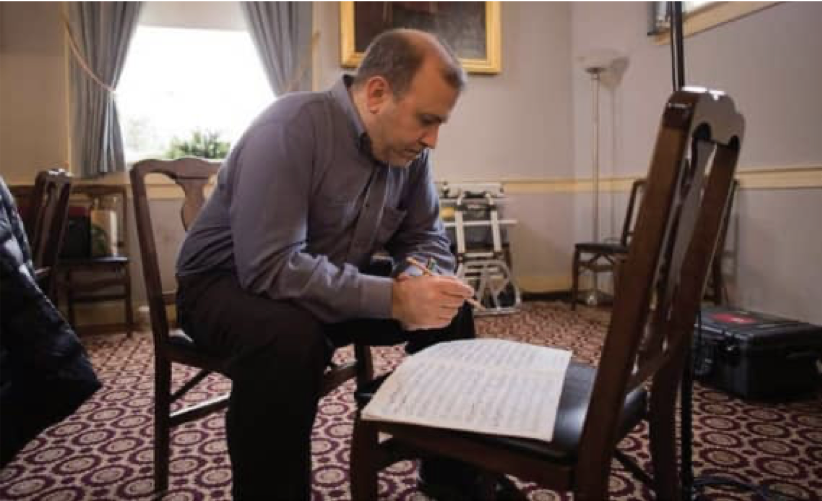
Robert DiLutis studying scores during a recording session break for the Delos recording Clarinet Classics at Riversdale (May 2019).
Known for his warmth on- and off-stage, Robert has inspired countless students and colleagues with his entrepreneurial spirit and devotion to sound. In this conversation, he reflects on what it means to build a multifaceted career, to record meaningfully, and to stay connected—to music, to people, and to purpose.
BUILDING A MULTIFACETED CAREER
GABRIEL FERREIRA: Robert, you’ve worn a lot of hats over the years—performer, teacher, inventor, recording artist. As clarinet players, we often feel we have to stay in one lane. How did you build such a multifaceted path?
ROBERT DILUTIS: (laughs) I don’t know if I ever really planned it that way! I think flexibility has always been part of who I am. My father played trumpet in the Army Band, and my grandfather played in a polka band, so music was always around—but it wasn’t their only job. They worked day jobs and played music because they loved it.
That taught me early on that being a musician doesn’t mean doing just one thing. It’s about finding joy in every opportunity to make music. I play in chamber groups, as a soloist, in a polka band—you name it. The more variety, the more connected you stay to the reason you started playing in the first place.
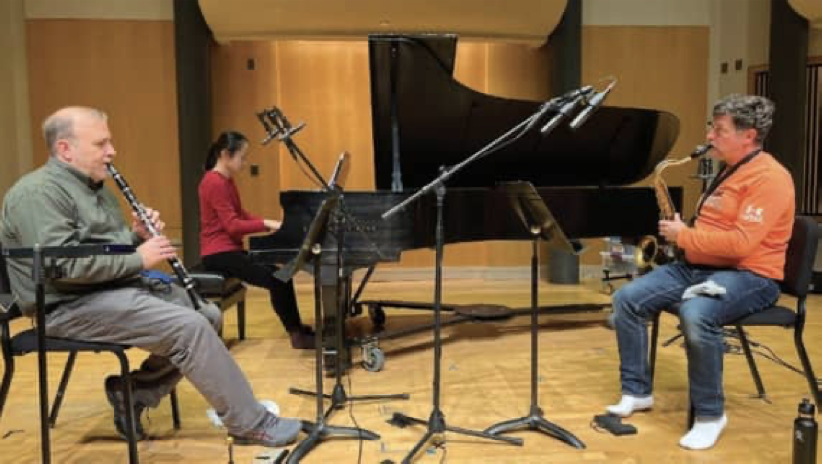
Robert DiLutis, Ying-Shan Su, and Noah Getz during a recording session for Vignettes: Influential Works of Black Composers (January 2022).
ON RECORDING AND PRODUCING YOUR OWN WORK
GF: You’ve built quite an extensive discography over the years. How did you first get into recording your own projects, and what’s your approach to producing them?
RD: My first real recording project was back in 2008, and since then, I’ve been producing and selling albums almost every year. Recording has always fascinated me because it’s one of the best ways to learn about sound—your own sound and the ensemble’s.
Most of my projects have been self-produced. That’s pretty common now. A full CD project can run between $5,000 and $10,000, so it’s a serious investment. But when you’re passionate about the music, you find a way.
For example, I funded my album Clarinet Classics at Riversdale through grants and fundraising. Once I had the finished recording, I sent it to Delos, and they picked it up for release. It’s all about believing in the project and putting in the legwork.
My most recent album, Dedications, really captures that philosophy. It features two close collaborators: pianist Rita Sloan—my colleague at the University of Maryland—and cellist Carrie Bean Stute, whom I met through her chamber series Chiarina in D.C. We’d worked together before, and that connection made all the difference. I’ve learned that the best projects start with people you love making music with, not with a spreadsheet or a budget.
FROM IDEA TO ALBUM
GF: When you start thinking about a new recording, what’s the process like from beginning to end?
RD: It usually starts with a spark; just a few pieces that I can’t get out of my head. I’ll put together a concert program and play it a few times. Live performances are the best preparation for recording because they tighten ensemble playing and improve intonation.
Then comes the logistics: I talk to the musicians, make sure everyone’s committed, and build a budget. Finding the right recording company and engineer is crucial. A great engineer can save you hours in the studio. An experienced company and a good audio engineer will be looking out for you; they’ll help you work smarter and not longer. They’ll make notes, like “the opening 10 bars were not together for the first five takes, but take six was solid.” Just think, this kind of notetaking will help you focus on what’s usable; otherwise, you’d have to listen to what could be hours of takes. Venue choice is another big one. I like churches or concert halls with good acoustics, but you also have to think about practical things—HVAC noise, street sounds, even people talking in nearby rooms. Those things can really derail a session.
Ideally, I record for three days in a row, about six hours each day. Day one is for getting everything down, day two for fixes, and day three for polishing. After that, I spend days listening to takes, choosing edits, and working with the engineer to assemble the best version.
And when the final mix comes in? I listen to it everywhere—in my car, on headphones, on speakers—because each one reveals something new. The mastering stage ties it all together. From start to finish, it’s usually a one- to two-year process.
FINDING YOUR SOUND
GF: You’re known for having a really warm, human sound on your recordings. What do you listen for when you’re in the studio?
RD: I want the listener to feel like they’re in the room with us—that’s always my goal. I go for warmth and balance over perfection. I’d rather capture a raw, genuine take than spend hours editing something sterile.
Mic placement and acoustics make all the difference. I love recording in spaces with natural resonance. I stay away from really dry studios unless it’s for commercial work, where that kind of sound makes sense.
Getting that sound takes years of listening. You have to develop an aural concept of what you want—just like developing your clarinet tone. It’s a mix of taste, patience, and a lot of trial and error.
COMMUNITY CONNECTION
GF: You’re really active in your local community, too. Why is that important to you?
RD: Because community is everything. Your neighbors are your first audience, your first supporters. I play in my community at least 10 times a year—churches, libraries, parks, anywhere that brings people together. Those are the performances that keep me grounded. Music doesn’t live in the practice room; it lives where people can experience it.
ON FINDING A PERSONAL VOICE
GF: Let’s talk about sound and identity. Why do you think some musicians are instantly recognizable?
RD: It all comes down to time in the practice room—years of it. That’s where your voice develops. It’s the same for singers; they spend years learning how to use what’s naturally theirs. For us, it’s the same process with the instrument.
I tell my students: listen to everyone. Steal the things you love from every artist, then mix them together until they become you. That’s how a personal sound forms—it’s not imitation, it’s evolution.
ON EQUIPMENT AND TONE PHILOSOPHY
GF: You’ve mentioned before that you blend French and German influences in your sound. How does that work in practice?
RD: (smiles) Carefully! My teacher, David Weber, always said there are only good and bad tones—not French or German ones. He studied with people from both schools and took what he liked from each. I’ve always loved that idea.
I use a combination of equipment that gives me flexibility, and yes, I’ve even experimented with German reeds on a French mouthpiece. It’s not for everyone, but it works for me.
I tell students to try everything—German, Austrian clarinets, different setups—because it opens your ears. Suddenly, you understand why something on a European recording sounds so different. It’s all part of learning your own instrument.
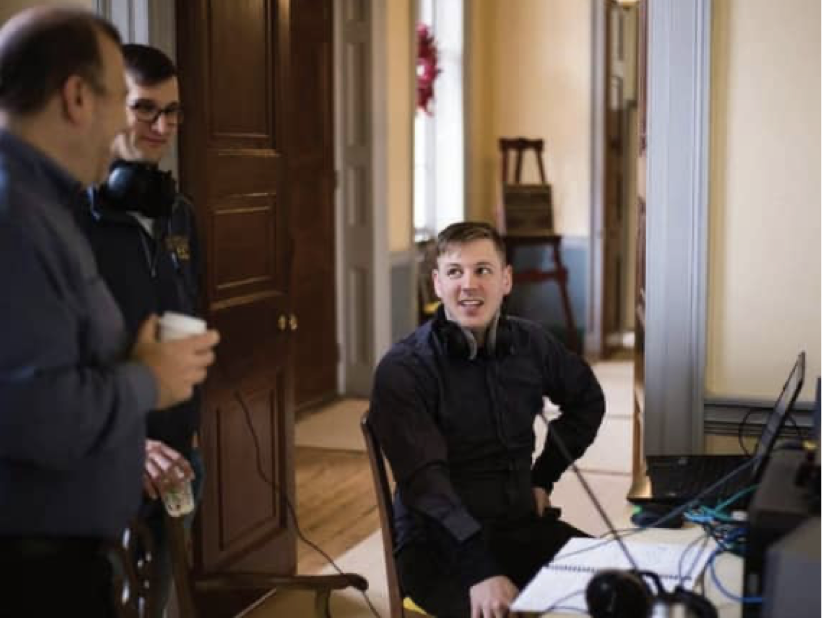
Robert DiLutis, Nick Hodges, and Christian Amonson during a recording session for Mozart at the Mansion (December 2017).
LESSONS LEARNED FROM RECORDING
GF: What’s something you’ve learned after all these recording projects?
RD: Be patient. A great recording takes time—lots of it. Give everyone a chance to listen, comment, and rest their ears. And always have a piano tuner on hand! (laughs) We had to tune three times during the recording of Dedications.
Unexpected things always happen. I’ve had fire alarms go off mid-take, heat stop working in the middle of winter, kids screaming outside during soft passages—you name it. You just have to roll with it and keep your sense of humor.
And in today’s world, most sales are digital. For every physical CD sold, I might see a couple thousand downloads. So, I’ve learned to print fewer hard copies—it’s a different landscape now.
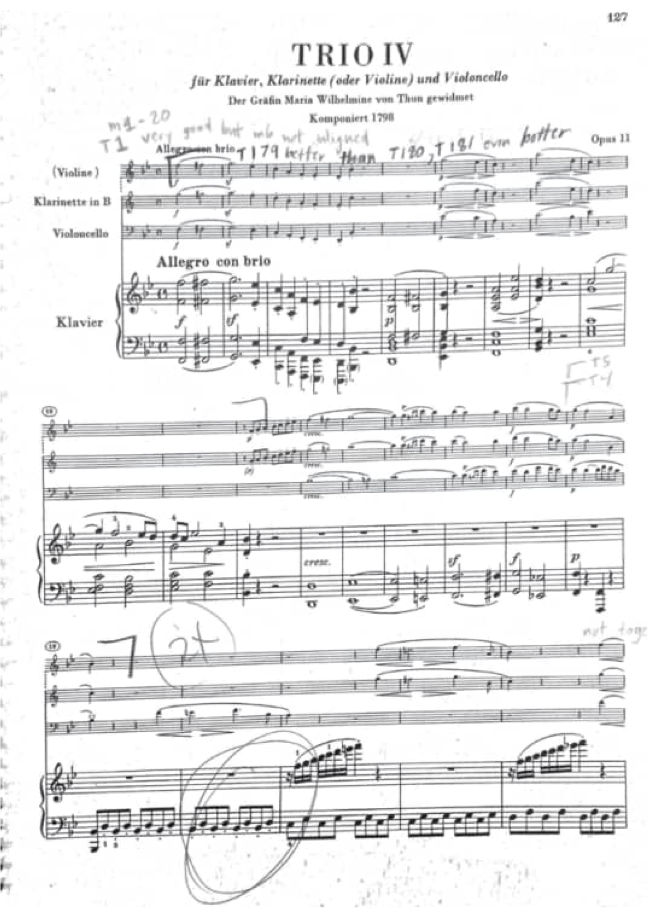
Engineering notes for the Beethoven Trio, Op. 11.
ADVICE FOR EMERGING ARTISTS
GF: For students or professionals making their first big recording, what’s your best advice?
RD: Plan everything. Budget everything. And make sure you love the music enough to live with it for a long time, because recording is a marathon, not a sprint.
If I could redo any project, I’d tour and perform the music more before recording. The more time you spend living with the pieces, the more natural they feel when the red light’s on.
Honestly, my favorite part of any project is the CD release party, which usually takes place at my home. Sharing the final product with friends, family, and colleagues—that’s when all the hard work really feels worth it.
FINAL DETAILS
GF: Out of curiosity, how many people were involved in your Dedications album?
RD: (laughs) More than I realized at first—11 in total! Three musicians, a sound engineer, a grad assistant, an editor, a photographer, two CD company employees, a church director, and a piano tuner. It takes a team to make music happen.
 Gabe Ferreira is a graduate of the University of Maryland, where he studied with Robert DiLutis from 2012 to 2016. After a few years of teaching privately in the Washington, D.C. metro area, he enlisted in the U.S. Army Bands program in 2018. His military career has expanded his artistic perspective through diverse performance settings—from presidential funeral processions, to concert halls, to long concert tours of mounted brass band performances in New Orleans parades. These experiences inspired him to broaden his work beyond clarinet performance into writing, video production, and concert photography, with a focus on capturing and sharing the voices and perspectives of clarinetists and their communities.
Comments are closed.