


Interviews with Past Winners of the ICA Young Artist Competition
by Sayyod Mirzomurodov, Kaitlyn Nohara, and Micheale Ryan
[Editor’s Note: Members of the ICA Development Committee recently completed interviews with several past winners of the ICA Young Artist Competition. This article contains short biographies of each interviewee and their interviews.]
Robert DiLutis
Young Artist Competition — Second Prize (1987)
Interview by Kaitlyn Nohara, ICA Development Team & Winter Intern
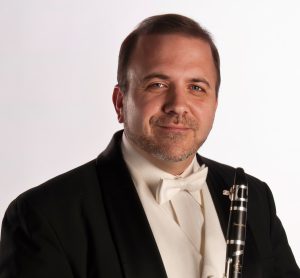 Robert DiLutis is the professor of clarinet at the University of Maryland, College Park, and the principal clarinetist of the Annapolis Symphony Orchestra. DiLutis previously served as professor of clarinet at the Louisiana State University School of Music from 2009-2012. He has also held positions with the Rochester Philharmonic Orchestra, San Antonio Symphony Orchestra and the Eastman School of Music. DiLutis has served on the faculties of St. Mary’s University in Texas and Nazareth College in New York. His recent recitals and masterclasses have included the University of Georgia, University of California at Northridge, University of South Carolina, Catholic University of America and the International Clarinet Conference in Assisi, Italy.
Born in Baltimore, MD, to a family of musicians, DiLutis studied first at the Peabody Conservatory with William Blayney and later at the Juilliard School with David Weber, principal clarinetist of the NYC Ballet. In 1989 he made his Carnegie Hall Recital debut as the winner of the Artist International Chamber Music Competition. As a soloist, DiLutis has performed with ensembles such as the San Antonio Symphony, LSU Wind Ensemble, Rochester Philharmonic Orchestra and the Baton Rouge Symphony Orchestra. DiLutis has performed and toured with the New York Philharmonic and is currently co-director of the Clarinet Academy of America, an intensive summer program for advanced clarinetists in high school and college. In addition to his performance career, DiLutis is the creator of the Reed Machine, a reed making device used by top professionals around the world.
How did this ICA competition impact your artistic or professional journey?
It was so many years ago—1987! At the time, I was a student at Juilliard and very interested in competitions. Participating in the ICA competition gave me valuable insight into the level of performers in the field, and it inspired me to practice more and work even harder. The skills I developed through the experience proved essential when I later began auditioning for professional orchestras.
How did you first hear about the ICA Competition, and what initially attracted you to it?
I was a member of the ICA and read about the competition in the journal. The prize money and the opportunity to perform at the Clarinet Conference were strong motivators for me.
What was the most memorable part of your competition experience?
Meeting other performers and forming friendships that have truly lasted a lifetime.
What are you currently working on in your career?
I’m currently writing a graphic novel on reed making—a fun and creative journey into this almost lost art.
Where can ICA members hear more of your work?
My website: robertdilutis.com
What advice would you give to young clarinetists considering entering the competition?
Work hard, and apply. I always say: you have to play to win! Sharing your love of music with others is at the heart of what we do. If you have an opportunity to do that, take it.
Jason Fettig
Young Artist Competition — First Prize (2000)
Interview by Sayyod Mirzomurodov, ICA Development Committee
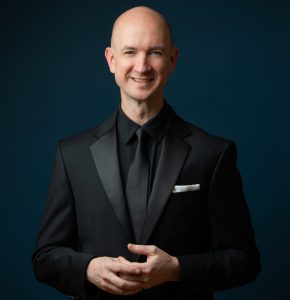 Jason Fettig is an internationally recognized conductor and educator, known for his distinguished service as the 28th Director of “The President’s Own” United States Marine Band from 2014 to 2023. He has collaborated with leading artists across the classical, Broadway, and popular music worlds, conducted at major venues including Carnegie Hall and the Kennedy Center, and led performances for two U.S. Presidential Inaugurations. Fettig is also a dedicated advocate for music education, having created nationally broadcast programs, premiered numerous new works, and served as a guest conductor and clinician across the U.S. and abroad. He currently serves as Director of University Bands at the University of Michigan.
How did winning an ICA competition impact your artistic or professional journey?
This competition was the first international event that I entered as a performer, and I did so with no expectations. Winning the competition was a wonderful surprise and important validation for my continuing career as a professional performer. It gave me tremendous confidence to continue to pursue opportunities that might have otherwise intimidated me.
How did you first hear about the ICA Competition, and what initially attracted you to it?
As a student clarinetist and then a professional musician, I was long aware of the ICA and its incredible work as a resource for clarinetists across the globe. I was interested in meeting other clarinetists through the competition and learning more about the state of our art at the time.
What was the most memorable part of your competition experience?
I have to say that hearing the final announcement that I had won was certainly the most memorable moment! Prior to that, I remember all of the competitors spending time with each other and wishing each other well in the results. This kind of camaraderie in the middle of a necessarily competitive environment was a joy to experience and something I have endeavored to promote at every stage of my career.
What are you currently working on in your career?
When I won the competition, I was in my third year as a member of the clarinet section of “The President’s Own” United States Marine Band in Washington, D.C. Later that year, I was selected as an Assistant Director and Conductor. I eventually became the Director of the band from 2014–2023. I am currently the Director of University Bands at the University of Michigan in Ann Arbor—and I am finally also playing clarinet again!
Where can ICA members hear more of your work?
Since I haven’t performed as a clarinetist professionally for more than 20 years, public recordings of my work on clarinet are sparse. However, there are many videos and commercial recordings with me conducting available on YouTube:
- United States Marine Band: https://www.youtube.com/@usmarineband
- University of Michigan Symphony Band: https://www.youtube.com/@umsymphonyband
- Wikipedia: https://en.wikipedia.org/wiki/Jason_Fettig
What advice would you give to young clarinetists considering entering the competition?
The first piece of advice is to always walk through an open door to see where it leads. If you are considering an application to this excellent competition but are worried that you aren’t qualified, just do it. You will never know what you are capable of achieving until you try, and the worst that can happen is simply not that bad. The most important aspect of being in competition is forgetting that it is a competition. Our work is about sharing an emotional moment and making authentic music. I believe those who win are those who are able to honestly share who they are from the stage and achieve that magic in performance that goes well beyond the right notes. Everyone has something special to share in our community, so go out and share it!
Paul Surapine
Young Artist Competition — Second Prize (1976)
Interview by Micheale Ryan, ICA Development Committee
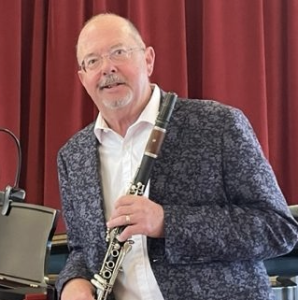 Paul Surapine, clarinetist, conductor, and educator, was the Second Place Winner of the 1976 International Clarinet Competition, then hosted by the International Clarinet Society. A student of Kenneth Lagace and later the legendary Kalmen Opperman, Surapine’s early grounding in the French School of clarinet playing shaped his artistic
path and long-term musical career. He has performed widely as a soloist, including major clarinet concertos with the orchestra he founded in 2000—the Claflin Hill Symphony Orchestra—where he serves as Founding Executive and Artistic Director. Under his leadership, Claflin Hill has developed into a dynamic professional ensemble with a significant orchestral repertoire spanning more than twenty-five seasons. Surapine continues to perform, teach, and advocate for the arts in the Greater Boston
area. His work can be heard through Claflin Hill’s concerts, online recordings, and the orchestra’s podcast, Classical Gassing. He resides in Milford, Massachusetts.
How did winning an ICA competition impact your artistic or professional journey?
In answer to what “life path effect” the competition had on me, I can say that having already been grounded in the “French School” and convinced that it was the “one, true path,” my interactions and experiences there in the 3 or 4 days I was at the ICS Convention served to propel me further in my quest to become “that” kind of clarinetist.
As it was a competition for high schoolers, it didn’t include any attached concert recital tour or recording package, but it looked very nice on my high school senior resume as I applied for colleges and prepared to take the next steps in my tutelage.
The following year, I was a freshman at the St. Louis Conservatory, studying with George Silfies, the Principal Clarinetist of the St. Louis Symphony. He had studied with MacLane at Curtis, they gave me a full scholarship, and I was frankly terrified of Opperman, having met him once or twice while in high school. I had first heard of Silfies at the Convention, and figured he would be a “safe” alternative to Opperman while still being grounded in the French School. Turns out, he wasn’t much of a teacher, and although he sounded good in the orchestra, he no longer held with any of the MacLane/French School concepts—he played single lip on a crystal mouthpiece!!!
The next year, I steeled myself and returned to Hartt to begin studies with Opperman—an apprenticeship that spanned over 3 decades and was the inspiration for every single thing I have done in my life since, as a clarinetist and above all, a musician.
How did you first hear about the ICA Competition, and what initially attracted you to it?
The competition was held in Denver, Colorado, at the University of Denver campus in August 1976, which was where the presiding President of the International Clarinet Society taught. That might have been only the second year of the competition, and at the time, it was restricted to aspiring high school clarinetists who had not yet entered university or conservatory.
At the time, I was studying with Mr. Kenneth Lagace at the Hartt School of Music in Hartford. Lagace had been a student of Kalmen Opperman and was a strong proponent of the “French School” of playing, including double-lip embouchure, which I became a “convert” to at the age of 14! It was purely serendipity that I began my clarinet studies in his studio and thus became a “French School” student—he was the only teacher who had a Saturday morning lesson opening!
Mr. Lagace had shown me a flyer advertising the competition in the spring and encouraged me to register and compete. We were required to submit a recording of the Weber Concertino, and somewhere around 20 semi-finalists were invited to Denver during the Annual “ICS Convention,” which was set for August.
1976 was a good year for me as a young and motivated clarinet student. I had been selected to the National High School Honors Band in February of that year in Atlantic City under Dr. William D. Revelli, and was appointed Concertmaster by Dr. Revelli himself. Not only that, I survived an entire week of rehearsals under him and remained Concertmaster even at the performance! In the summer of 1976, our Greater Hartford Youth Orchestra toured Switzerland, and I got to perform the Mozart Concerto at concerts throughout that country, which is when I learned by Western Union Telegraph that I had been selected for the next and final rounds of the Competition.
At the Convention, the twenty young contestants played in front of a select panel—again, performing the Weber—and six finalists were chosen for the final round, where they would perform the Debussy Rhapsodie in front of a full audience of convention attendees, judged by the panel led by Leon Russianoff, who was the seeming “Svengali” of the convention.
I won second place in the final round. The winner was a kid named Bil Jackson, who, I believe, hailed from Missouri, had won the Competition the previous year, and was now a student of Russianoff.
What was the most memorable part of your competition experience?
It was an extremely interesting and eye-opening experience for me from a multitude of perspectives.
As a kid born and raised in the “taciturn nature” of New England, I was confused by the open friendliness of strangers on the street! Guys wearing cowboy hats walking by on the street and saying, “hi, how are you!!!” We didn’t do that in the streets of Connecticut! Another surprise challenge to all of us contestants, coming from all over the country, was that NONE of our reeds worked the same in the Mile High City!!! The air and humidity were SO dry that it seemed as if the reeds were drying up in our mouths in the midst of trying to perform!! Like all “nerd” clarinetist conversations, the warm-up room conversation topic was constantly, “man, these reeds aren’t working!”
I was also the ONLY double-lip player in the competition, and no one there seemed to have ever heard of Opperman, Harold Wright, or Ralph MacLane!
What are you currently working on in your career?
I continue to work and perform as a musician, living in Milford, MA—outside of Boston.
In 2000, I founded the Claflin Hill Symphony Orchestra, a regional professional orchestra, and it has evolved into an amazing and energetic ensemble that aspires to the highest standards my teacher set for me and for all who dare to follow his ideals. As a clarinetist, I have performed most of the great clarinet concertos with my orchestra, and our 25-year catalogue of monumental orchestral repertoire is significant.
Where can ICA members hear more of your work? (Website, recordings, YouTube, etc.)
Examples of my playing and career can be found at www.claflinhill.org or by googling Paul Surapine and/or Claflin Hill Symphony Orchestra on YouTube.
We also recently launched a podcast called “Classical Gassing,” which is a platform for community discussion of the arts in society, the role of an orchestra as a vehicle of community and unity, and the many aspects of creating art and keeping it alive for posterity from a business perspective.
Garrick Zoeter
Young Artist Competition — First Prize (1991)
Interview by Sayyod Mirzomurodov, ICA Development Committee
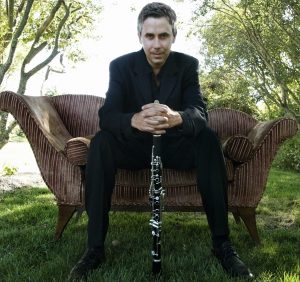 American clarinetist Garrick Zoeter is known for his expressive musicianship, award-winning chamber music career, and long-standing dedication to teaching. A graduate of Juilliard and Yale, he made his solo debut with the National Symphony Orchestra at age seventeen and later won major prizes in both solo and chamber competitions, including the ICA Young Artist Competition. Zoeter served for fifteen years as a member of the acclaimed quartet Antares and currently holds the Anna Lee Van Buren Professorship of Clarinet at Shenandoah Conservatory.
How did winning an ICA competition impact your artistic or professional journey?
I won the competition back in 1991! It was in Flagstaff, Arizona. I had done many competitions in high school, so continuing to do them in college (I had just finished my
freshman year at Juilliard) seemed to me to be a good idea…
Winning was very exciting since my playing was being validated by the clarinet world specifically. It was the first “clarinet only” competition I had ever done. One of the best things was the prize, which was an all-expense-paid trip to France to visit the Vandoren factory in the south of France, and to play for various teachers at the Paris Conservatory, the main one of which was Michel Arrignon, who I had heard perform at the conference in Flagstaff and whose energetic and engaging playing I really loved.
Winning this competition inspired me to keep going in the quest to have music and the clarinet be my career.
How did you first hear about the ICA Competition, and what initially attracted you to it?
Since I was already on the competition circuit so to speak, I was very familiar with the competition. In fact, I had been a finalist in the competition the year before in 1990 when the conference was in Quebec City.
What was the most memorable part of your competition experience?
Certainly having my name called as the winner was a great moment! It is always a great feeling to know that the hours and hours spent practicing paid off!
I think another one of the most memorable parts was the fact that my mother was there—she had come with me to Arizona—and so having her there seeing me win was very special. It was also the first time I visited the Grand Canyon!
What are you currently working on in your career?
I am the Anna Lee Van Buren professor of clarinet at the Shenandoah Conservatory of Shenandoah University in Winchester, VA, which I have been for the last eighteen years! So my teaching takes up a large portion of my artistic life.
I also perform a great deal of chamber music. I performed with a clarinet, violin, cello, piano quartet called Antares for 15 years, so performing chamber music is my greatest love. I live a very varied life in music – for instance this coming Monday I will perform in Magnus Lindberg’s Tivoli for Three Clarinets, and then on Sunday I will perform Finzi’s 5 Bagatelles and Ponchielli’s Paolo and Virginia with a chamber orchestra.
Where can ICA members hear more of your work?
I have a YouTube channel: https://www.youtube.com/@ZoeterClarinet I think this channel is quite unique in that I started it in 2009 as a way of featuring performances of not only myself, but also my students at Shenandoah. It has become a musical diary of sorts, covering the last 17 years, as there are now 178 videos on there and almost 450,000 views! I have slowly watched my hair turn grey in these videos over the years!
What advice would you give to young clarinetists considering entering the competition?
Emotionally direct, musically expansive, and energetic, exciting performances are the ones that I think win competitions, or rather should win competitions—so you need to say something with the music and touch the listener—this is the most important thing!
Also, remember that the “judges” are excited to hear you play and are wishing so much for you to do a great job! They are on your side! Be a musically giving performer and you are going to have great success!
Comments are closed.