
Composer of the Month November 2025 – Reena Esmail |
|
Interviewed by Thomas Piercy Reena Esmail Featured Composition – Clarinet Concerto This video includes a performance of Reena Esmail’s Clarinet Concerto in its new version for clarinet and piano. The performance is followed by an interview with clarinetist John Kurokawa. Other Works for Clarinet
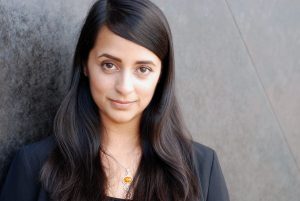
ICA (Thomas Piercy): You and your music. Tell us a bit about yourself. Reena Esmail: A bit about me. I grew up in Los Angeles, which is where I still live, and I also grew up in an Indian American family. I’m Indian by lineage. My mother grew up in Kenya, and my dad grew up in Pakistan, and they met in Orlando, Florida. So just a really interesting story. Maybe very much the American dream. I would not be here if America did not exist. I grew up really wanting to be a pianist. I think you just see people performing, and you think, oh, I want to do that. And it wasn’t until I was almost at the end of my high school years that I even realized that you could compose, and it could be a job. But one thing led to another very quickly, and I ended up doing my undergrad at Juilliard, and then my master’s and doctorate at Yale. Actually, one of the very first pieces I ever wrote was this little, tiny piece called “Desire” for clarinet and piano. And I wrote it because I needed an audition piece to audition for Eastman, and I just hadn’t written enough music to even send for the audition. And there was a clarinet teacher at my high school who was really great, and so I wrote a piece for her, and she and I played it. That was one of my few pieces that I sent in for my undergrad auditions. I’ve written a lot for the clarinet, and I think one of the things I’ve always been drawn to is just its flexibility and how beautiful it sounds in every single register. When I was young and when I was writing my first pieces, I loved that the clarinet was such a forgiving instrument and that you could just write so many things for it, and it would always sound really beautiful. As I got older, I discovered this incredible clarinetist whose name is Shankar Tucker. He is someone who adopted the clarinet for Hindustani music. He has actually created a situation where you can really slide and gliss between more notes than you would be able to on the western clarinet. I fell in love with clarinet an entirely new way when I heard him play, and my clarinet concerto is written for him. But of course, I also really wanted Western clarinets to be able to play it, so I wrote out a lot of his improvisations, just so that Western clarinetists would have access to it. And John Kurokawa was the really brave clarinetist who went first and played that concerto. And since then, a number of other clarinetists have done it. It’s really exciting to see how it sounds in different hands, whether you know a lot about Hindustani music or whether you are really new to it, and I think that is something that I care a lot about in my music, that whatever your knowledge is, however you’re trained, whether you’re trained completely in western music, and you just like the sound of Indian melodies and you want to kind of try something out, or whether you have, like a really, really really deep knowledge of Indian classical music and raga and all of that. I really want you to be able to feel that you have an access point to my music. I think for this piece that I’m going to write, I’m aware that it’s probably mostly people who have not really explored Indian classical music before, and I think that’s what I’m excited about, that I’m writing for so many people who may be in different places in their experience as clarinet players, but also in really different places in their understanding of the concepts of Indian Classical music. Indian classical music is so mellifluous. The melodies are so kind of ornamented and flowing and just really gorgeous. And that’s what’s always really attracted me to Indian classical music. I in between my masters and my doctorate at Yale, I went to India on a Fulbright grant. And that was when I really started learning Indian classical music very deeply, and that was in 2011/2012, so almost 15 plus years into this journey, and it’s just been really exciting to bring the style of music to so many people who are experiencing it for the first time and many who actually aren’t. ICA: What is your composing process like? Do you have a regular routine/time of day you like to work? What tools do you use to compose? [i.e., pencil and manuscript paper, keyboard, notation software, music synthesis software, etc.] RE: What is my process like? I really try to maintain a regular schedule. So composing is all I do. I don’t have another job somewhere else. Really that’s my main job. I really try to make sure that I have as rigorous a schedule as possible. I’m someone who I think if I wasn’t a composer, I would probably be somewhere in higher mathematics or something like that. I love a spreadsheet. I love numbers. And I actually do really try to make sure that I maintain a certain amount of hours that I compose every day and that I do it kind of at the same time every day. ICA: What would you consider the most challenging aspect of composing music? RE: I do think that one of the most challenging aspects of composing music is just maintaining that daily practice. And then I think another really challenging aspect of composing music is really trying to anticipate what will really make a performer sing, what will make them feel alive? It’s really hard to know. I think sometimes when I’m writing for one performer, I can go back and forth and try things with them and really see what’s working for that one person. And sometimes, actually what works for one person will work for many people after that initial performance. But writing a piece for so many people right away is its own unique challenge, because you don’t have a specific person in mind so that that can be really challenging. ICA: What was/were your major instrument(s)? Do you feel different when composing for that instrument? RE: My major instrument was the piano. That’s the only one I would say I feel really confident concertizing on. I also played the violin and the guitar, and I have done a lot of study of Indian classical singing, Hindustani singing. I think I approach the clarinet very much like I do many melodic and especially wind instruments through the lens of the voice, because I do actually sing every single thing that I write for everything you see on the page, every melody. There’s some recording somewhere of me singing it into my phone and trying to really hone that melody before I even write it down on a piece of paper. ICA: Do you think it’s important for a performer to know the theory behind a piece to have a successful performance of your music? RE: Good question. Do you think it’s important for performers to know the theory behind a piece to have a successful performance of your music? Yes and no. To a certain extent, it is nice when people do understand elements of Indian classical music that I’ve included in my music. Of course, not all of my music is completely Indian, and it doesn’t completely reference exact Indian ragas or something. Sometimes I’m making artistic decisions myself, but at the same time, I think it’s more about people who are just kind of naturally musical, following their intuition. I will say that perfect performance is less important to me than really feeling that someone is able to express who they are through my music. Some of the most touching performances I’ve heard of my music have been people who I can tell that they’re able to be themselves, or they’re able to find something new about their own musical language, that they’re able to express something maybe they wouldn’t have been able to express otherwise. That’s why I write music. So I guess on one hand, I’m an absolute theory nerd, and I love, love, love, nerding out about all the different kinds of theory, whether it’s a western classical theory or Indian classical theory, and how those things relate to one another. Oh my gosh, I could talk about that all day. But what I really want performers to take away is this sense of breadth and this sense of expression in my music. ICA: Any advice to composers that are in college looking to go beyond college, whether as a professional musician or all the many different paths they could go down. RE: What I would truly say is follow the resonance, because sometimes we have an idea about what our career should be like. Oh, I see someone doing that thing, and that looks successful or prestigious to me, and I want it. I want to just do what that person is doing. And I think sometimes you know when you kind of keep hitting a wall, and sometimes then you also know when you just kind of shake a handle of a door and it just opens in front of you. I will say, like the door of being a pianist was not opening for me. I tried so hard, I practiced so hard for so many hours every day, and for whatever reason, I’m just not wired like a performer. And the minute I started shaking that handle of the door of composition, it just kind of flew open. That’s not to say that my career was easy or that I didn’t have all kinds of setbacks, but I somehow just knew that composing was something that felt resonant to me. I think we can all feel that, right? We’re all musicians, and we can feel maybe that moment when you walk out onto the stage and you can tell whether the audience is with you or not. It’s like a tangible feeling. I think there’s also a very tangible feeling when you know that a thing that you’re doing in the world is a thing that’s being met by people who want it. I think if you just follow that resonance, and you use your creativity, not only to play your instrument, but in every other aspect of your career, to build a kind of creative life, you will find that there are so many things that are not explored. There are so many things even I can’t conceive of right now, that those of you who are starting your careers will be able to, if you’re just open to it, ICA: Life as a composer. Burnout is something many of us go through at different times in our careers. It’s an important discussion to have, although many find it difficult to discuss or do not talk about it all. If you have had some periods of “burnout”, can you share some instances of when you felt burnt out, what led up to it, and how did you get out of it? RE: The question of burnout. I would say burnout is it’s a moving target, because I think that at different times in your career there are different things you need to do, and then there are different things you need to say no to. And admittedly, I don’t think I’m very good at that. I don’t think I’m really good at determining where I am and where I will be in a number of years. As a composer, you plan many, many years out. And so sometimes I say yes to something because it feels right in the moment, but then it doesn’t feel right three years later, and yet I’ve committed to it. So it’s really hard. You have to put things in motion so far in advance being a composer that it’s also hard to kind of stop things when you need a break. One thing that I’ve started doing is to take a month off of my regular life in January of each year and just try to spend time only composing and not worrying about anything else. Admittedly, that was really hard for me. The first time I did it was in 2023 and I basically spent the entire month of January trying to understand what having that month long sabbatical was. In 2024 maybe I got a little bit better at it. 2025 was completely wiped out because of the fires, and put me months and months behind schedule, which I still am now. Maybe it’s just that we need to have a little bit of mercy with ourselves as we try to navigate things. I know that things that my teachers would have been so proud of me to say yes to are things that I have to say no to now, because they could never have conceived the world that I would be going into and I think that’s true in every generation. In a lot of ways, you always feel like you’re flying blind and you feel like you have to make each decision in the moment based on what feels right, and that’s really hard. I guess just to have some little bit of empathy for ourselves as we’re going through our careers, because a career in music is not like many other careers. There’s not a straight, direct path. Being Indian, you can imagine how many friends I have who have gone through medical school, and I just see that they’re able to, at each step in their career, know kind of where they are: are they doing their pre-meds?; are they doing going to medical school?; have they reached their residency?; are they taking their MCAT? All these things are so clear and a path in medicine, but in music, we just don’t have those things. So I think we do have to be kind to ourselves in making each decision that we make. ICA: The future. Can you tell us about your current or upcoming projects? Can you tell us anything about the ICA Consortium Commission piece? RE: Current and upcoming projects. One of the things that I think is really unusual about my career is I work pretty evenly across the orchestra world, the choir world, the chamber music world and now the band world. These worlds are quite far from one another. Especially the orchestra and choir worlds are really different, and yet I love being in all of them kind of simultaneously. I’ve been finishing up a set of folk song arrangements in different Indian languages for choir and piano and sending them off to my publisher. I just wrote this massive Harp Concerto for the harpist Yolanda Kondonassis. She plays both harp and percussion, and it’s actually choreographed. She moves the harp around the stage as she’s playing. It’s one of the most theatrical pieces I’ve ever written in my life, and it just premiered a couple weeks ago. I’m excited to be working on this massive Concerto for Orchestra for San Francisco Symphony and Philadelphia Orchestra. Bartok Concerto for Orchestra has always been just a really important piece to me. Most of my orchestra works are actually concertos, and I think I just love that idea of being able to have a person that specifically writing for. But I thought, well, what if that person is actually many people, and I write many solos, so I’m looking forward to all of that Then in this next season, I also have band work for a consortium in Chicago, a string quartet coming up and a really exciting piece for violin and baritone. So I’m looking forward to it all! |
|
The ICA has commissioned award-winning composer Reena Esmail (https://reenaesmail.com/) to write a new work for B-flat clarinet and piano. ICA members will be invited to support the creation of this work through participation in the Commission Consortium and to schedule their own local premiere to occur July 13th, 2026, or later! Consortium members will receive the completed composition as an electronic PDF document no later than March 31, 2026, with their name listed as a co-commissioner. The ClarinetFest® premiere of the work will take place at ClarinetFest® 2026 in Incheon, South Korea, at the 53rd meeting of the International Clarinet Association. The tiers available for participation in this consortium are as follows:
|
Comments are closed.